Meeting of minds: Industry in conversation

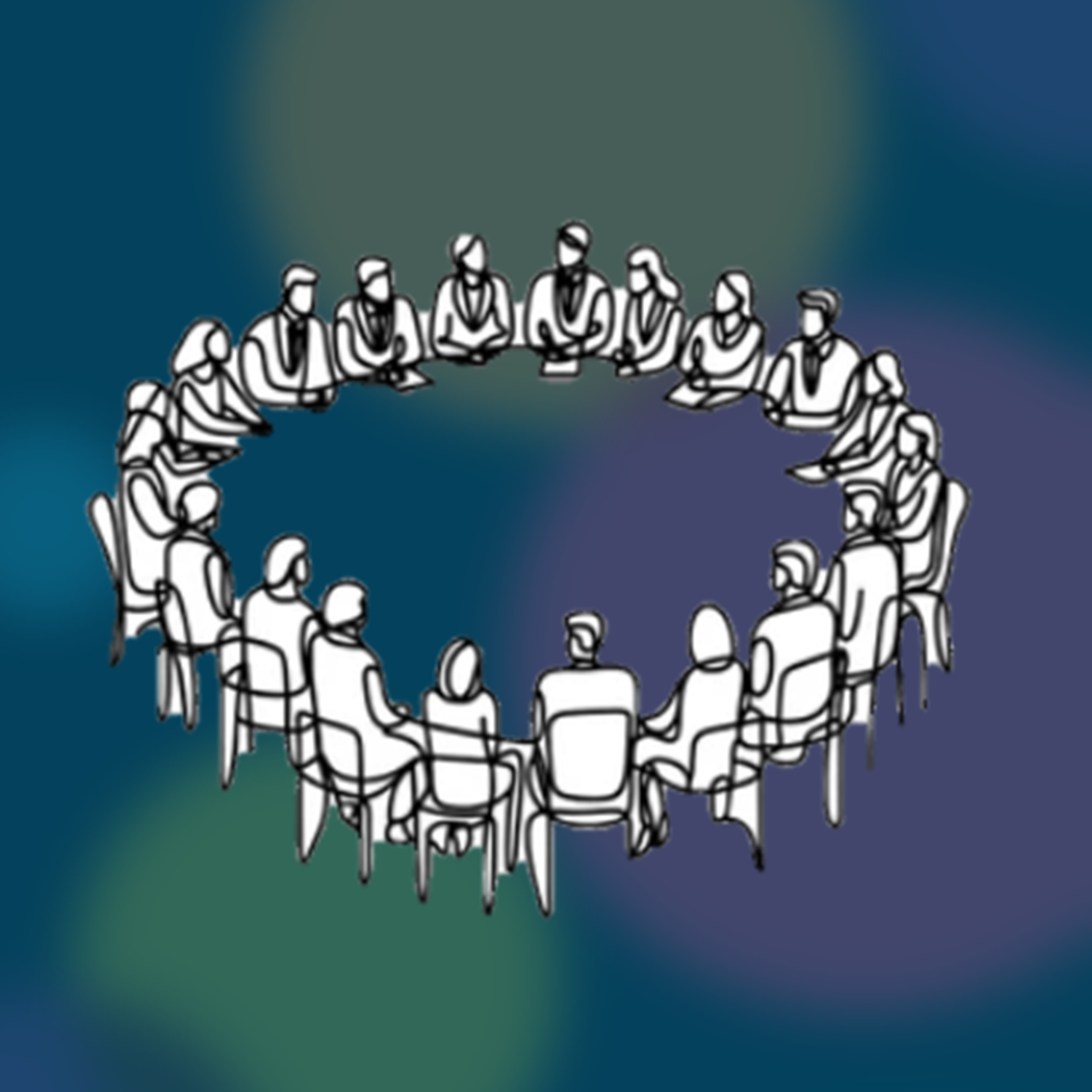
The Industry Alliance Forum, “Advancing bio-psycho-social innovations for mental health & wellbeing,” held jointly by Mental Health Platform and DATAMIND took place in May 2026 in London.
There was much to talk about, so in June the MHP and DATAMIND set up a follow-on online conversation between two lived experience experts from the Social Health Hub/McPin who had not attended the Forum and two representatives from industry and research who did. The aim was to demonstrate how the Forum is an example of working collaboratively to develop new ways to manage severe mental illness.
Thanks to Syeda Tahir, lived experience researcher; Fin Williams, industry representative; Cheryl Williams, lived experience research expert; Justin Yang, early career researcher with lived experience.
The core question was this - how can people with lived experience have meaningful involvement in how safe treatments are developed and made available? Without them, there would be no mental health research and no pharmaceutical or well-being industries, and yet their involvement has often been limited.

Using technology to support wellbeing
Syeda Tahir, a lived experience researcher asks:
Who owns the ideas and data? If our real-life stories and app data help a company make a profitable tool, who owns it? How do we stop them from locking that tool behind an expensive paywall after we helped build it for free?
Fin Williams, an industry representative, is also a clinical psychologist. She founded the Rumii Platform which uses phone handset sensors to passively detect the first shifts in our physical and emotional health.
Rumii is for young people aged between 15-30 and is named after the 13th Century Poet Rumi. Fin explains: "He was one of the first poets to really talk about love and human interconnectedness." Rumii does not track conversations, nor does it sit behind a paywall.
Cheryl Williams, who has many years of lived experience research expertise, responds by saying that she is perhaps ‘cynical Sue.’ She names an app she loves, once free but now behind a pay wall. She pays for it but says: "I am on the fence now. There is a separation there. I do not feel as invested as I did." There is a loss of trust.

Owning our data and stories
Justin Yang, an early career mental health researcher at UCL, agrees with Cheryl. He says, “You remind me, there is a Chinese saying that is ‘the wool of the sheep comes from the sheep.’ So, it is your data. You are exactly right. These are your data. These are your stories. So, it is always appropriate to ask: how are they making money with your data, your stories?”
Cheryl and Syeda both have questions not just about how their ‘stories’ are used but about how their health data is used by research and industry.
Fin explains that Rumii works with health providers to better understand the health outcomes of behavioural patterns. Users’ data is provided to them for insights and support, whilst aggregated and anonymised to provide insights to research and health providers. She says:
"We are transparent about this, and our aim is that this is data for good – to support health understanding and treatment."
If people leave, they can request that any data not already aggregated is deleted.
When Cheryl asks whether this might change as business plans develop. Fin says that given customers are research organisations and that money pays for access from consumers there is no need for a paywall – and will not be unless the cost to provide the service becomes unsustainable, even with external funding.
Power imbalances in PPIE
Justin talks more about what he calls the ‘power imbalance’ of data exchange he has witnessed first-hand as a PPIE member at a scientific society. He says: ‘they are lab scientists by training and are sometimes uncomfortable talking to people who have these conditions. Like me - and I am a fellow scientist!’
Justin believes that training is crucial for researchers – and not being scared to have the difficult conversations. Justin also notes that while mental health research has made a lot of progress towards partnering with PPIE compared with other health conditions, much more can still be done.
Syeda, who holds a science degree, shares a similar experience to Justin. Having been offered access to an MSc in Computational Science to support a PPIE project she is leading on for the Wellcome Trust, she notes: "It just means that I can understand the terminology—and I can join in the conversation."

There was consensus that the imbalance is often around language and a perception that people with lived experience are there to tell their ‘story’ rather than being involved in research or business development opportunities. Everyone agreed that PPIE can and should be much more than a box-ticking exercise – something that the Industry Forum meetings have demonstrated can happen.
They agree academics could really help people with lived experience to gain parity and a role beyond that of ‘lived experience consultant'. Cheryl says:
It is challenging work for us. Do not leave us in the dark. If here is a gap and we do not understand then train us, invest in us, take us on the journey.
What's next?
This summer, the Mental Health Platform and DATAMIND are setting up a lived experience working group which will look at developing collaborative approaches among industry, research, and lived experience experts.
There will be one shared goal – to work together as partners to improve mental health outcomes for all – non-hierarchical, reciprocal, for mutual benefit. There is a way to go to work as equal partners, but the conversation has most definitely begun.