Author name:
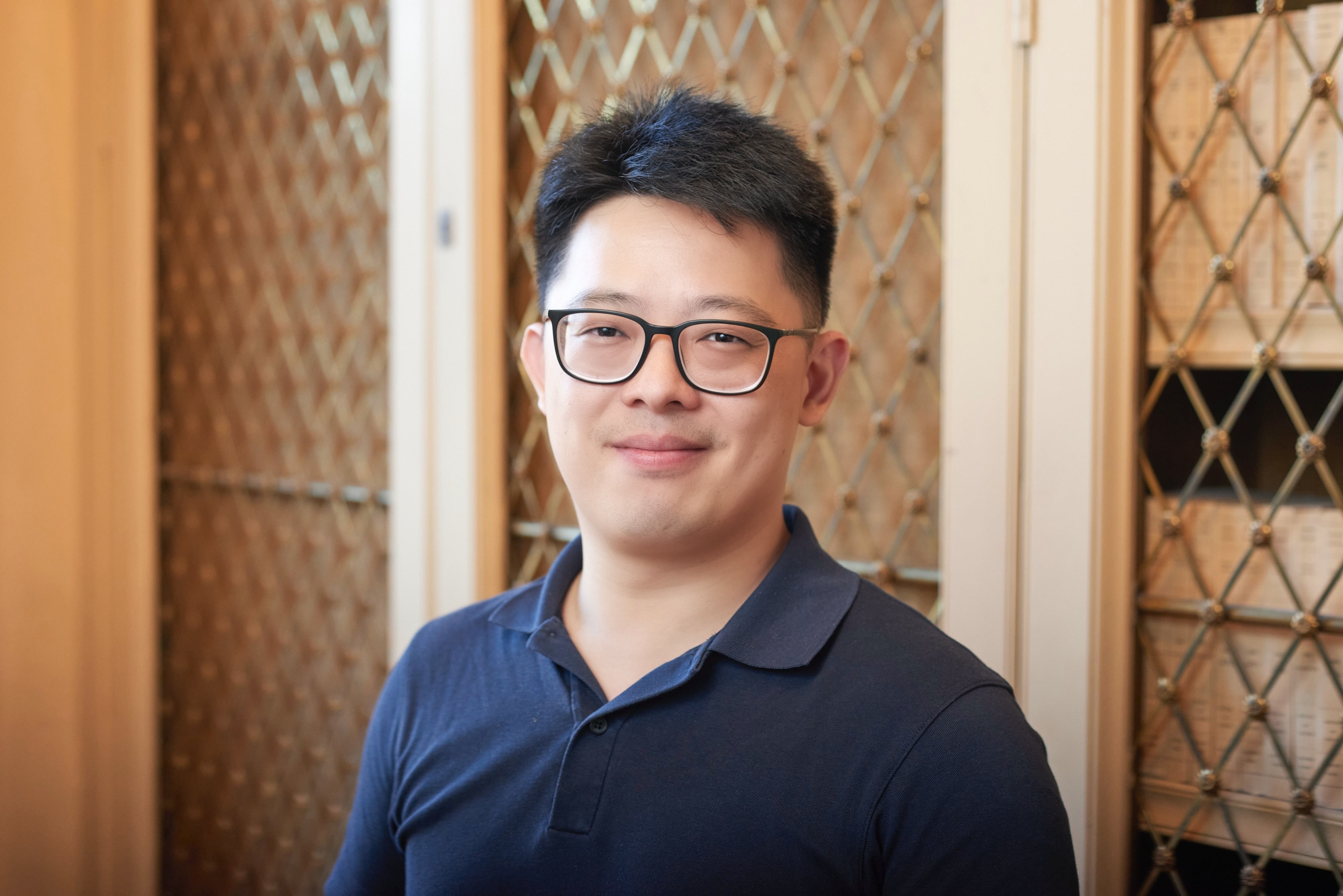
Justin Yang
Institution name: University College London
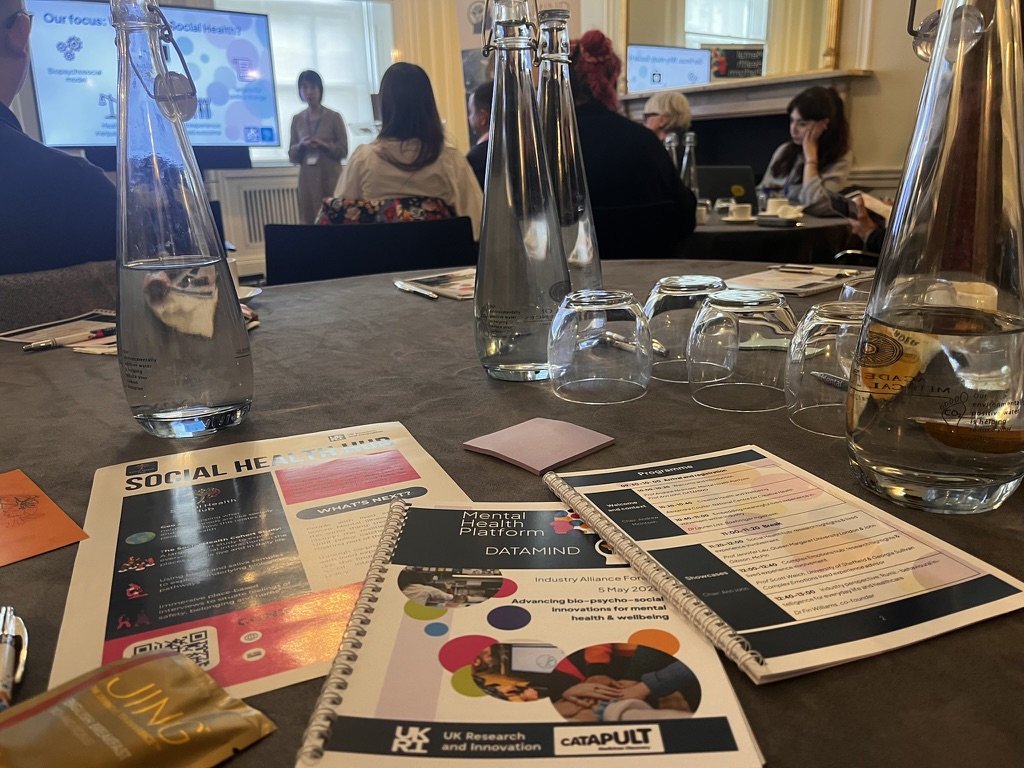
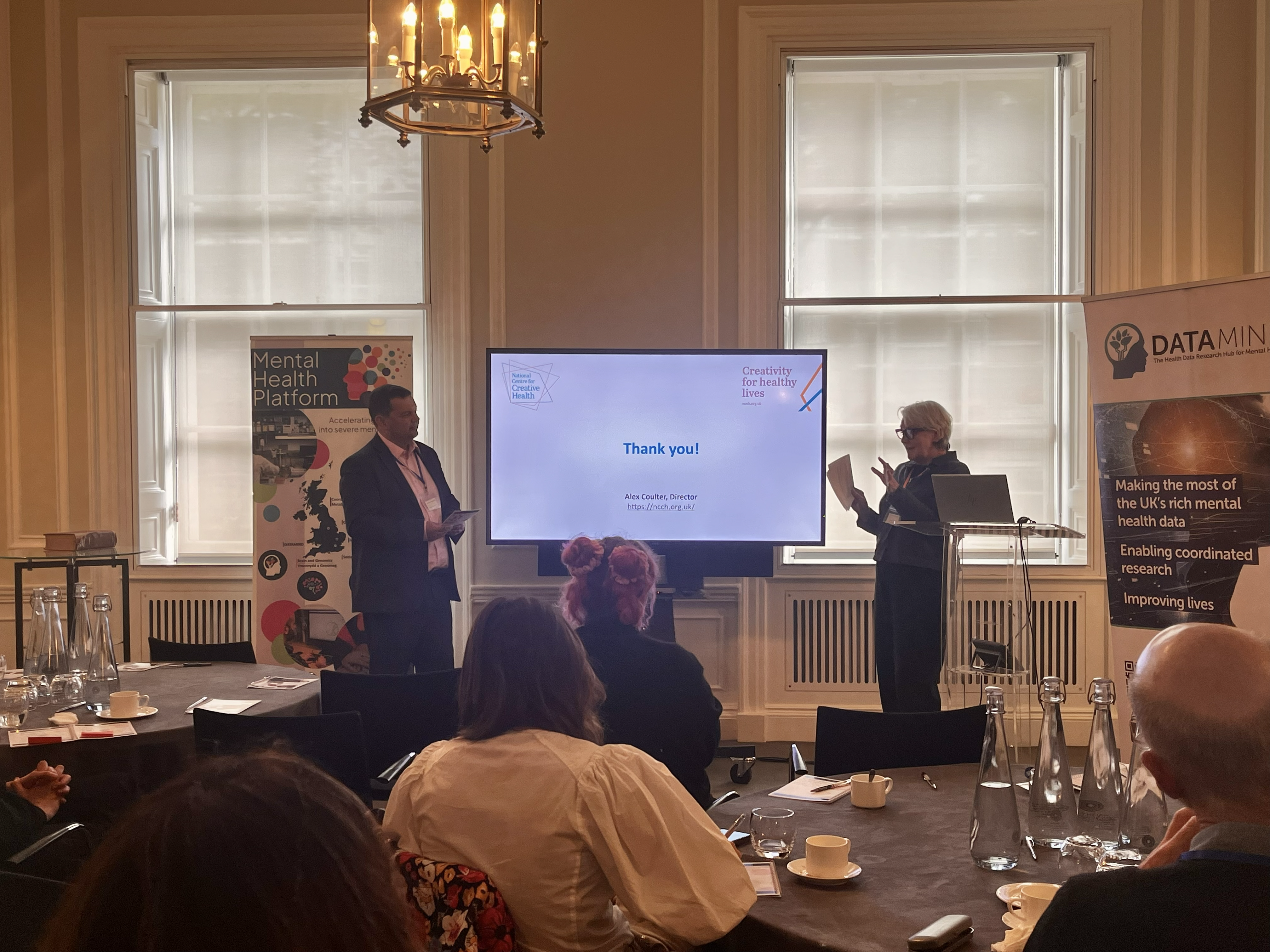
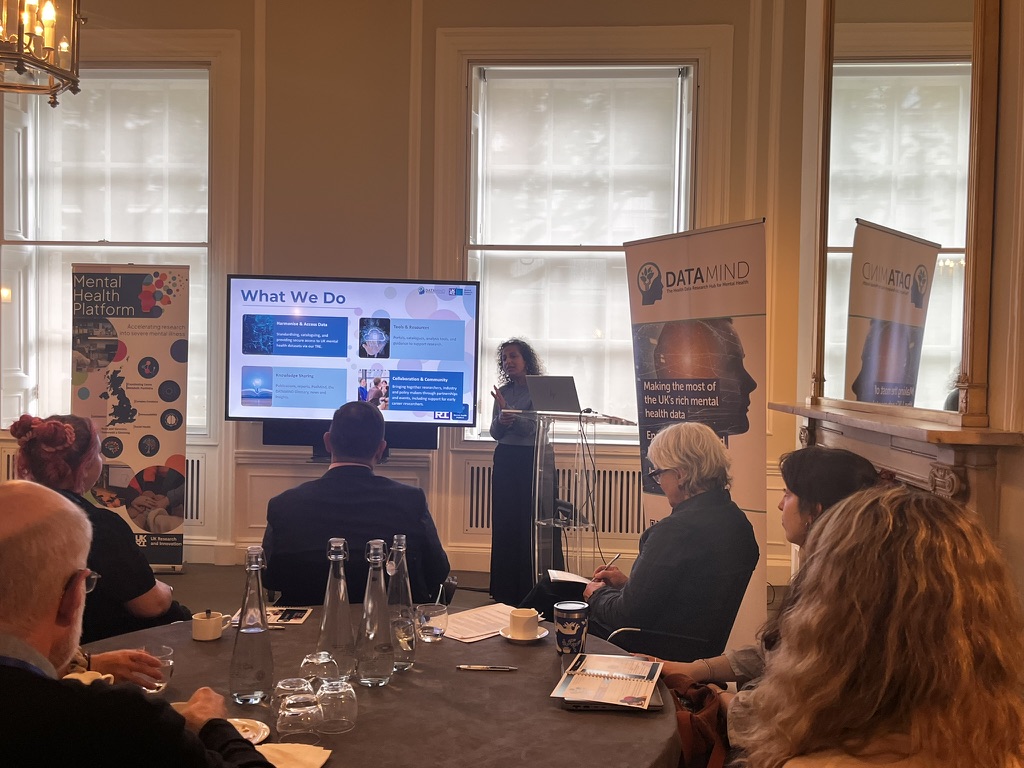
The Industry Alliance Health and Wellbeing Forum, held jointly by Mental Health Platform and DATAMIND, took place in May 2026 in London - bringing together researchers from DATAMIND, Social Health and Complex Emotions, industry leaders and individuals with lived experience of severe mental illness.
Justin is a researcher who attended the event, and shares some of his reflections from the day.
What do we miss when our models of mental health become too narrow?
At the Industry Forum on Health and Wellbeing held in London, I left with a strong sense that many of us in the room were circling around this same larger question. It stayed with me because it speaks to a tension I often feel in mental health research. We need categories, measures, outcomes, and methods; without them, research quickly becomes vague or unusable. At the same time, people do not live as diagnostic categories, trial endpoints, or data points. They live in relationships, homes, communities, routines, services, environments, and bodies. They live with histories, responsibilities, hopes, frustrations, joys, and fears.
They live, in other words, among the stuff of life.
If our research cannot make room for these layers of experience, even technically excellent science can end up missing something deeply important.
For me, this was the real value of the Forum. It was not just about how academia and industry might collaborate more effectively, although that clearly matters. It was about what kind of collaboration is needed if we are serious about health and wellbeing, rather than only illness, symptoms, and treatment response.
The most meaningful conversations seemed to return again and again to empathy, not as a soft or sentimental idea, but as a practical basis for better research. Empathy changes what questions we ask, which outcomes we choose, how burdensome our studies become, and whether people can recognise their own lives in the work that is meant to be for and with them.
That is also why lived experience felt so central. Involvement of people with lived experience has a much better impact when it is more than a “final check” on pre-determined plans.
Involvement offers a way of seeing what researchers might otherwise miss: questions of power, burden, relevance, trust, and dignity. Why are we asking this? What will this cost people in time, energy, discomfort, or disclosure? Would the outcomes we are measuring actually matter to someone trying to live well?
These questions are not separate from rigour. They are part of what makes research worth doing.
This leads to better outcomes for everyone. A trial that respects people’s time, energy, priorities, and daily realities is not merely kinder, it is likely to be better research. A technology that tries to understand daily life must be built around consent, transparency, and data sovereignty, not surveillance. A partnership that claims to serve people must be willing to let people change what is being asked and what counts as success.
One conversation from the day has particularly stayed with me. We were talking about singing, and the difference between a solo voice and a choir. A solo voice can be clear, strong, and powerful. It deserves to be heard in its own right. But when a choir is properly held together, not by forcing every voice to sound the same but by allowing different voices to find relation, it can create harmonies that no single voice could produce alone. That felt like a generous metaphor for the day.
The point of collaboration is not to blur the differences between academia, industry, lived experience, policy, services, and the third sector. It is to create the conditions in which those differences can become something richer than parallel lines of work.
This matters for translation too. We often talk about translation as if it were a pipeline from discovery to intervention to implementation.
But some of the hardest and most important work sits between those stages: in the assumptions we make, the relationships we build, the questions we choose, and the trust we either earn or fail to earn.
As a cross-hub fellow working across DATAMIND, the Social Health Hub, and the Complex Emotions Hub, I was proud to hear such a clear commitment to widening the frame. These hubs are different in focus, but they share a concern with what can be missed when mental health is understood too narrowly.
For DATAMIND, this includes thinking carefully about how mental health data can be made more discoverable, useful, secure, and trustworthy. For the Social Health and Complex Emotions hubs, it means taking seriously the social, relational, emotional, and experiential dimensions of mental health.
Across all three, the challenge is not simply to produce more research, but to make sure the research remains connected to the lives, priorities, and rights of the people it is meant to serve.
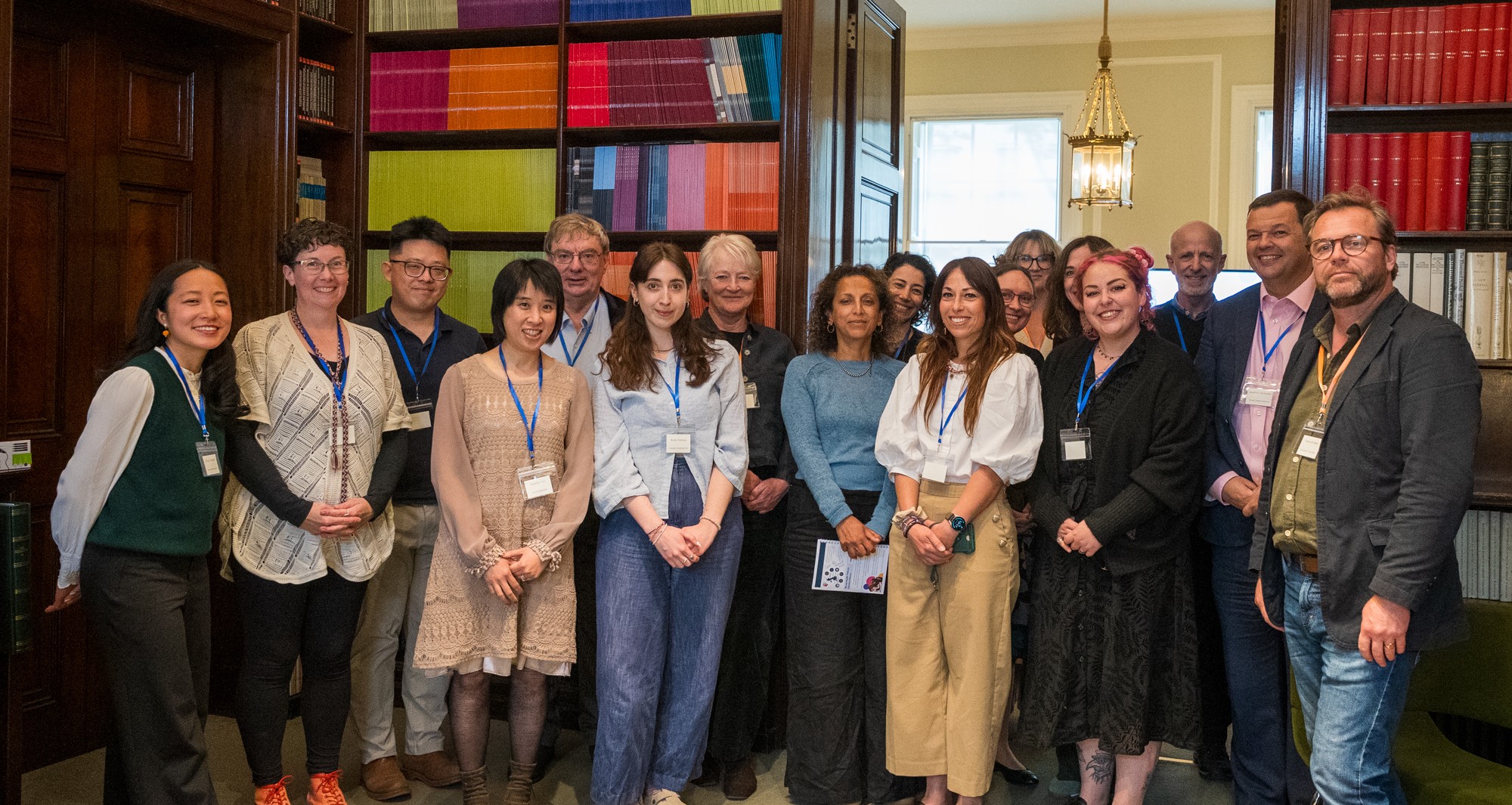
I left the Forum with a stronger sense that meaningful collaboration is not just about bringing different sectors into the same room, valuable though that is. It is about allowing different perspectives to change how we think and work.
None of us can see the whole picture alone.
But together, if we listen carefully and work with enough humility, we may be able to recover some of the missing layers of mental health research: the social, emotional, creative, relational, and everyday dimensions of what it means to live well.
That is what made the day feel hopeful to me. It did not make mental health and wellbeing seem simpler. If anything, it made them feel more complex. But it also made them feel more real. And perhaps that is the promise of this kind of forum: not only to accelerate mental health research and innovation, but to help ensure that what we accelerate is humane, trustworthy, and connected to the lives of the people it is meant to serve.